AGRICULTURE STAKEHOLDERS DEVISE WAYS TO STRENGTHEN AGRICULTURE EXTENSION SERVICES
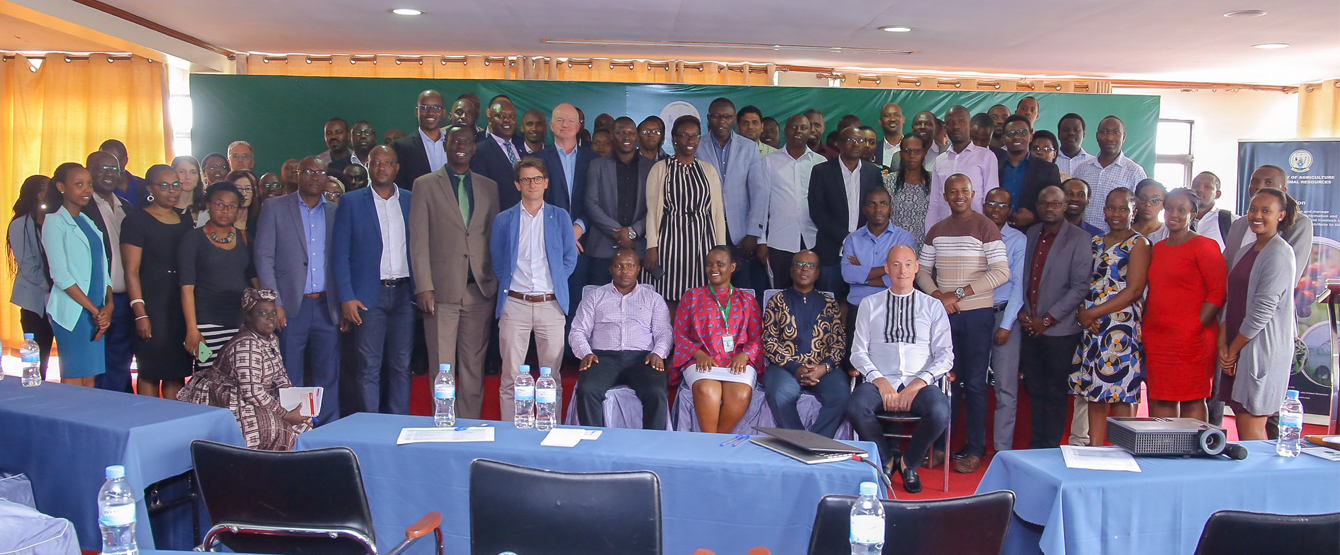
On December 18, 2019, about 100 key stakeholders in Rwanda’s agriculture extension met in Kigali to discuss ways on how harmonize the delivery of agriculture extension services in line with implementing the Strategic Plan for the Transformation of Agriculture (PSTA4).
The one-day consultative meeting, organized by the Ministry of Agriculture and Animal Resources (MINAGRI) and its partners, brought together policy makers, non-governmental organizations, Civil Society Organizations, Private Sector, Academia, and Researchers to discuss all challenges around the agriculture extension service delivery in Rwanda and come up with solutions.
Speaking at the launch of the meeting, Dr Charles Murekezi, the Director General of Agriculture Development in the ministry, said that there is a great need to improve the operations of the Twigire Muhinzi, a home-grown agriculture extension model that decentralizes extension services at the village level.
“Strengthening of Twigire should involve improving its quality by building the technical capacity for extension workers, SEDOs to ably backstop Farmer Field School (FFS) facilitators and Farmer Promoters (FP),” Dr Murekezi said. “Focus should be given to building the capacity of FFS facilitators, FP their cooperatives as well as revamping the performance evaluation and incentive system to retain competent FP and FFS facilitators.”
Currently, there are 14,200 farmer promoters and 2,500 FFS facilitators who train farmers groups through demonstration plots, field days and village meetings.
The official also highlighted the need for increasing the role of the private sector in the delivery of extension and advisory services and called for harmonization.
Already there several partners such as HORECO, Rwanda Youth in Agribusiness Forum (RYAF), TUBURA, HINGA WEZE, Catholic Relief Service (CRS), among others, which complement the public extension systems. There are however, variations in the approaches they use.
“I am sure, our other partners may be creating similar impact. Therefore, there is need to harness the positives of the extension models of our partners, but ensure that we harmonize and avoid duplication of efforts,” DG Murekezi said.
The current Agriculture Strategic Plan (PSTA4) highlights the role of extension services delivery system to achieve a market-led agriculture transformation for economic growth. This requires strengthening of and dialogue with relevant public and private entities to cooperate with them in achieving the policy’s objectives.
Topics

Rwanda held its third National Seed Congress bringing together actors in seed sector

Rwanda hosted Africa Food Systems Forum 2026

19th Rwanda Agricultural Show Concludes with Record Participation and Recognition of Agricultural Innovation

Rwanda Agricultural Show 2026: Stakeholders urged to leverage innovation and strategic partnerships for agri-food systems transformation
RWANDA’S AGRICULTURE SECTOR TRANSFORMATION OVER THE LAST 32 YEARS
Rwanda launched Green House Crop Insurance to boost climate-resilient agriculture

Rwanda to hold third National Seed Congress bringing together actors in seed sector

MINAGRI YIBUTSE KU NSHURO YA 32 ABARI ABAKOZI BAYO BAZIZE JENOSIDE YAKOREWE ABATUTSI