HON. MINISTER OF STATE NSENGIYUMVA LAUNCHES TEA PLANTING SEASON IN WESTERN PROVINCE

On October 12, 2017, the Minister of State in the Ministry of Agriculture and Animal Resources, Fulgence Nsengiyumva visited Gisovu tea estate in Karongi District and joined farmers from five tea famers’ unions to plant tea seedlings on three hectares in Twumba sector. It was a great occasion to launch the tea planting season.
After a community work (umuganda) of planting 44,000 seedlings of the cash crop, the Minister of State who was accompanied by the CEO of National Agricultural Export Development Board (NAEB), Amb. George William Kayonga and the Executive Secretary of the Western Province Mr. Pierre Celestin Habiyaremye with other officials discussed with farmers on the sub-sector’s status and its future. Hon Nsengiyumva lauded efforts invested by tea farmers in the industry and commended their current achievements.
“Gisovu teas won various awards from the world and we have come here to congratulate you and pledge our total support for further development,” Minister of State Nsengiyumva told the tea farmers.
He also appreciated the outstanding contribution of NAEB and the national tea farmers’ federation, dubbed Ferwacothe, in making the tea industry a success. He added that as far as the government is concerned, Rwandans should benefit from tea rather than anyone else.
“These tea plantations are yours; as no one contributes to their productivity more than you, no one should gain more than you do,” he pointed out.
The gathering had time to tour tea seedling nurseries ready to be planted this season, the Gisovu tea factory and got insight on why Gisovu tea has the best of the word’s tea qualities.
Farmers pledged to improve tea productivity from 7.5 tons to 9 tons per hectare by 2020.
Tea was introduced in Rwanda in 1961. So far, the country has fifteen tea factories and eight of them are located in the Western province. Three more factories are being settled and will open soon.
Currently, tea is grown on 17,972 hectares in 12 districts of the country and 42,840 farmers earn life from tea industry.
Topics

Rwanda held its third National Seed Congress bringing together actors in seed sector
Rwanda held its 3rd National Seed Congress in Kigali from 20th to 21st July 2026, an event that highly emphasized the role of research, biotechnology,…
Read more
→

Rwanda hosted Africa Food Systems Forum 2026
From 1st to 4th September 2026 in Kigali, Rwanda hosted the 20th edition of the Africa Food Systems Forum (AFSF), which brought together more than…
Read more
→

19th Rwanda Agricultural Show Concludes with Record Participation and Recognition of Agricultural Innovation
The 19th Rwanda Agricultural Show officially closed on Friday, 31 July 2026, at the Mulindi Show Ground in Gasabo District, Kigali City, marking…
Read more
→

Rwanda Agricultural Show 2026: Stakeholders urged to leverage innovation and strategic partnerships for agri-food systems transformation
The Minister of Agriculture and Animal Resources, Dr. Telesphore Ndabamenye, has called on farmers and other agricultural stakeholders to adopt…
Read more
→
RWANDA’S AGRICULTURE SECTOR TRANSFORMATION OVER THE LAST 32 YEARS
Over the past 32 years, Rwanda’s agriculture sector has undergone a remarkable transformation, evolving from a subsistence farming into a modern,…
Read more
→
Rwanda launched Green House Crop Insurance to boost climate-resilient agriculture
On 7 May 2026, Green House Crop Insurance was officially launched during an event held at the headquarters of the National Institute of Statistics of…
Read more
→

Rwanda to hold third National Seed Congress bringing together actors in seed sector
Rwanda will hold its 3rd National Seed Congress in Kigali from 20th to 21st July 2026, an event that will bring together key stakeholders to discuss…
Read more
→

MINAGRI YIBUTSE KU NSHURO YA 32 ABARI ABAKOZI BAYO BAZIZE JENOSIDE YAKOREWE ABATUTSI
Kuri uyu wa Gatanu tariki ya 15 Gicurasi, 2026, Minisiteri y’Ubuhinzi n’Ubworozi (MINAGRI) n’abafatanyabikorwa bayo bibutse ku nshuro ya 32 abari…
Read more
→
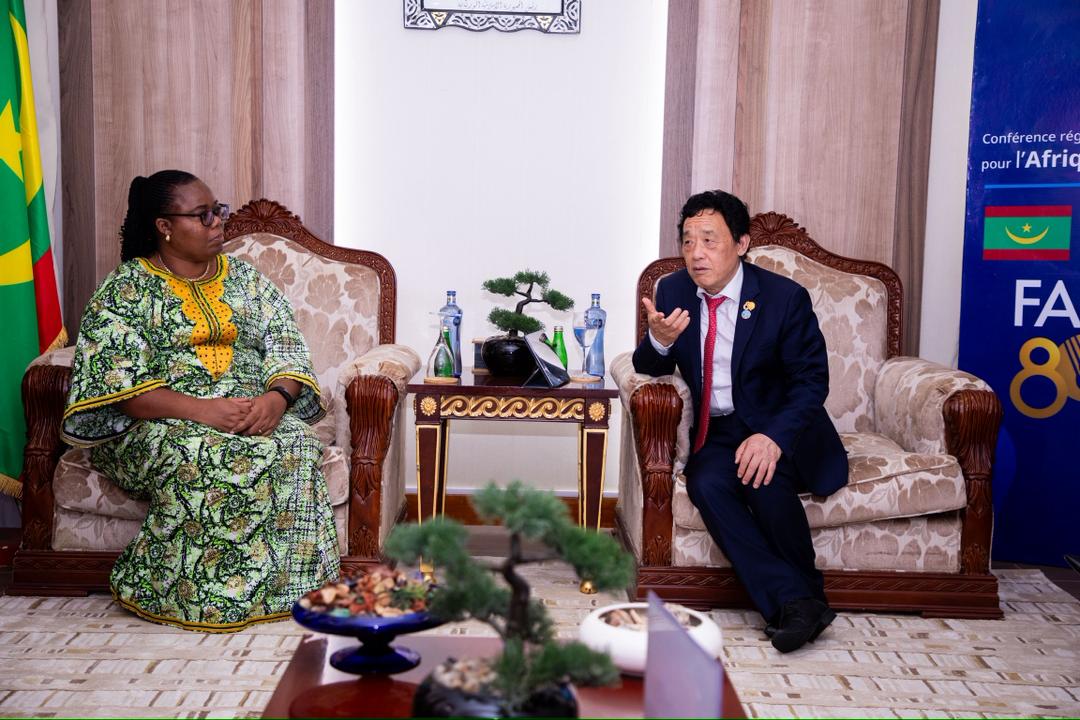
Minister of State Dr. Solange Uwituze meets FAO Director-General Dr. QU Dongyu
The Minister of State for Agriculture and Animal Resources (MINAGRI), Dr. Solange Uwituze, on Wednesday April 15th 2026 met with FAO Director-General,…
Read more
→