MAIZE SMALLHOLDER FARMERS REAPING BIG FROM ENHANCED POST-HARVEST HANDLING
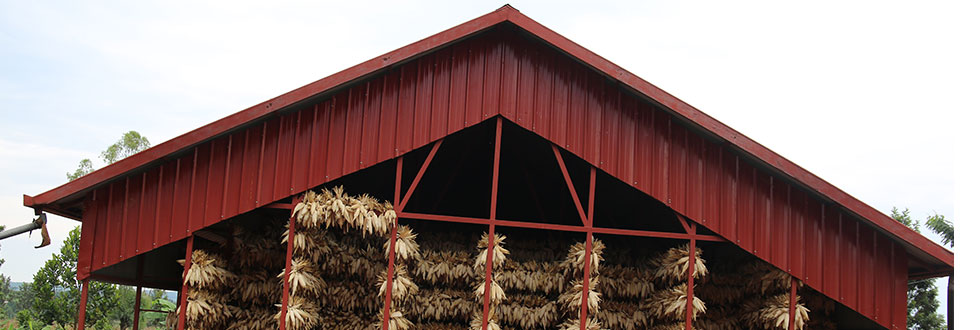
By the end of this farming Season 2019 A, maize farmers working under KUDUIBI Cooperative from Mugesera Sector of Ngoma District expect to get increased maize output that has already attracted large scale buyers with high prices.
According to Epiphanie Murerwa, the president of the 102-member cooperative, the farmers will get around 500 tons of good quality maize and the Africa Improved Food (AIF) has already started buying part of the produce – which gives them reasons to smile this time.
Unlike this season, the farmers last season struggled in vain to secure market for their produce.
“Last season we sold out only 61 tons while the remaining 400 tons were rejected by the market because of poor quality. We were told that the produce was contaminated with aflatoxin due to poor post-harvest handling,” the cooperative president says, adding that they incurred huge loss since they could not get market for their produce of poor quality.
Since then, they carried out a study visit in Gisagara District of Southern Province to learn from their colleagues the best practices to improve their post-harvest management and contain aflatoxin.
Aflatoxins are poisonous carcinogens that are produced by certain molds which grow in soil, decaying vegetation, hay, and grains. They are regularly found in improperly stored staple commodities such as cassava, maize, and other types of grains.
To contain the aflatoxins, Murerwa explains, the farmers have now turned to maize hanging techniques locally known as ‘Gusharika’ as the best practice to ensure good quality of maize grains.
“All farmers in the village dry their corn on the same site. We have a total of 35 sites. We have ready market for our 500 tons of maize, “KUDUIBI’s president says.
The Ngoma-based cooperative is not an exception, but thousands of farmers across the country are doing the same to improve their post-harvest handling.
According to estimates from Rwanda Agriculture and Animal Resources Development Board (RAB), the country expects around 430,000 tons of maize from the agriculture season 2019A.
Currently, post-harvest loss for maize produce is around 15%.
Dr Gerardine Mukeshimana, the Minister of Agriculture and Animal Resources, says that Rwanda is committed to increasing agricultural productivity and reducing post-harvest losses to ensure that farmers get maximum benefit from their farming activities.
The Ministry of Agriculture and Animal Resources (MINAGRI) has been investing hugely in facilities that enable farmers to enhance their post-harvest handling. For instance, the ministry has constructed 525 modern drying grounds across the country and provided the farmers with more than 100 solar bubble dryers, among others.
Topics

Rwanda held its third National Seed Congress bringing together actors in seed sector

Rwanda hosted Africa Food Systems Forum 2026

19th Rwanda Agricultural Show Concludes with Record Participation and Recognition of Agricultural Innovation

Rwanda Agricultural Show 2026: Stakeholders urged to leverage innovation and strategic partnerships for agri-food systems transformation
RWANDA’S AGRICULTURE SECTOR TRANSFORMATION OVER THE LAST 32 YEARS
Rwanda launched Green House Crop Insurance to boost climate-resilient agriculture

Rwanda to hold third National Seed Congress bringing together actors in seed sector

MINAGRI YIBUTSE KU NSHURO YA 32 ABARI ABAKOZI BAYO BAZIZE JENOSIDE YAKOREWE ABATUTSI