MINISTER DR. MARK CYUBAHIRO BAGABE INAUGURATED THE KIBEHO TEA FACTORY
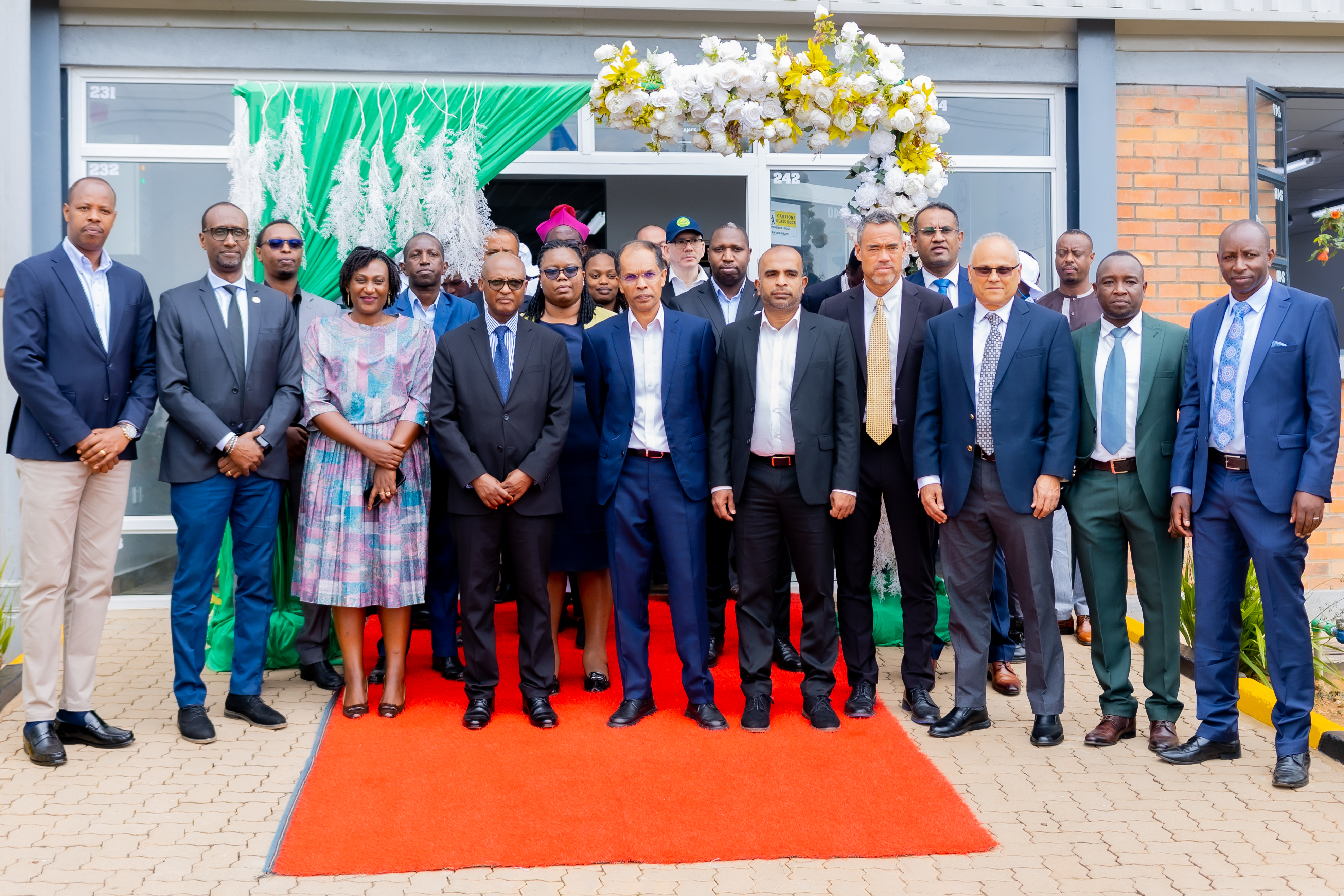
The Government of Rwanda, in collaboration with The Wood Foundation Africa and Browns Plantations Rwanda Ltd, commissioned the Kibeho Tea Factory in Nyaruguru District, Southern Province.
The factory was officially inaugurated on September 11, 2025, by the Honorable Minister of Agriculture and Animal Resources, Dr. Mark Cyubahiro Bagabe, on behalf of His Excellency President Paul Kagame.
Initiated in 2016, the project is part of a broader national strategy led by H.E President Kagame and is aligned with the government of Rwanda’s development frameworks, including the second National Strategy for Transformation (NST2) and the fifth Strategic Plan for the Transformation of Agriculture (PSTA5). The commissioning of Kibeho Tea Factory reflects a shared commitment to inclusive agricultural growth, improved rural livelihoods, and increased foreign exchange earnings.
Considered the largest smallholder tea greenfield development underway in Africa, the project, once complete, will result in the planting out of 6,417 hectares of smallholder tea and 720 hectares of industrial bloc, and construction of 2 state-of-the-art tea factories which will produce 15 million Kgs of made tea that will generate over $45million in foreign exchange earnings per annum for the country, with 50% of the made tea price going directly to farmers’ pockets.
While delivering his remarks, Minister Bagabe, reaffirmed that the Kibeho Tea Factory reflects Rwanda’s vision of transforming agriculture into a true engine of economic growth and he underscored the transformative impact of the project.
“This factory, equipped with state-of-the-art technology, will deliver efficiency, quality jobs, and new opportunities for rural transformation. Most importantly, it brings sustainable incomes to thousands of smallholder farmers, thus improving livelihoods, education, and health for their families,” he said.
Bagabe thanked all partners for their role in making the project a reality, while emphasizing the vision of H.E. President Kagame to empower farmers and modernize agriculture.
“The Kibeho Tea Factory is not an end, but the beginning of greater opportunities for farmers, stronger contributions to our economy, and a brighter future for Rwanda Tea on the global market,” he added.
Critical to the success of the investment are the 7,000 smallholder farmers who will provide 90% of the overall green leaf supply. These farmers are supported by service companies managed by the Wood Foundation Africa, to assist farmers with agronomic training, land preparation finance, inputs on credit, and collection and transport logistics as the exclusive supplier of leaf to the factories.
The construction of the Kibeho Factory was completed in April 2024, with an initial single black tea production line with a capacity of 2.5 million Kgs of made tea annually. It will produce premium black CTC Tea for export and local sales. Although early days, already 2,521 hectares have been planted by 3,390 farmers and 720 hectares of industrial bloc by Browns, with a projected crop this year of 9 million Kgs of green leaf.
With the ongoing plans to expand farmer’s tea hectarage area, the Kibeho factory will install its second and third lines in the coming years to accommodate the increasing crop, while the second factory will eventually be constructed in Munini Sector. These field and factory expansions are expected to contribute even more significantly to the local economy and support sustainable farming.
Beyond production, the project reflects Rwanda’s commitment to building resilient agricultural value chains and strengthening the country’s reputation as a global source of high-quality tea. With Rwanda tea already among the best-priced at international markets, the new facility will help diversify exports, add value, and increase competitiveness on the world stage.
Since it started its operations in 2017, the project continued to play a vital role in Corporate Social Responsibility (CSR) through initiatives in health, education, and community development, further strengthening the partnership between government, farmers, and the private sector.
END.
Topics

Rwanda held its third National Seed Congress bringing together actors in seed sector

Rwanda hosted Africa Food Systems Forum 2026

19th Rwanda Agricultural Show Concludes with Record Participation and Recognition of Agricultural Innovation

Rwanda Agricultural Show 2026: Stakeholders urged to leverage innovation and strategic partnerships for agri-food systems transformation
RWANDA’S AGRICULTURE SECTOR TRANSFORMATION OVER THE LAST 32 YEARS
Rwanda launched Green House Crop Insurance to boost climate-resilient agriculture

Rwanda to hold third National Seed Congress bringing together actors in seed sector

MINAGRI YIBUTSE KU NSHURO YA 32 ABARI ABAKOZI BAYO BAZIZE JENOSIDE YAKOREWE ABATUTSI