MULINDI TEA FARMERS UPBEAT AS THEY CELEBRATE THEIR ACHIEVEMENTS WITH WOOD FOUNDATION
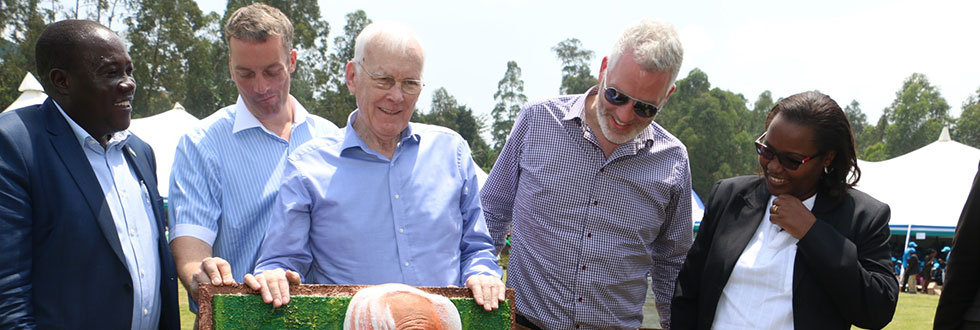
Tea growers in Gicumbi District have commended the government efforts in streamlining tea industry; saying it has enabled them to improve their lives significantly.
Following the privatization of Mulindi tea factory in 2012, tea farmers own 45% of the factory shares; thus giving them some control power over tea pricing. The price of tea leaves has increased from Frw 100/kg in 2012 to Frw 211/kg currently, the farmers say.
“I’m now able to make a monthly saving of Frw 200,000, and I also built a decent house worth Frw 3 million thanks to tea farming,” Anastase Bihoyiki, one of the tea growers, testifies.
The Mulindi-based tea grower was testifying during a Farmers’ Field Day event that took place on January 30, 2018 at the factory. The event, also attended by Minister of Agriculture and Animal Resources, Dr Geradine Mukeshimana, and philanthropist Sir Ian Wood, was dedicated to celebrating their 4-year achievements in partnership with the Wood Foundation Africa.
In line with the privatization programme of tea factories in Rwanda, the Wood Foundation and The Gatsby Foundation through their regional philanthropic investment vehicle, East Africa Tea Investments (EATI) in December 2012 acquired majority shares 55% and 60% respectively in Mulindi and Shagasha Tea Factories.
The investment deal is that the foundation will manage the two factories and recover their investments within seven years while building capacity of the tea farmers and thereafter hand over them to farmers. The foundation is working with more than 17,000 tea farmers in Gicumbi and Rusizi districts.
“We did not come here to make money; but instead, we want to help you make more money,” Sir Ian Wood told Mulindi tea farmers, adding that they decided to invest their money in Rwanda not only because the country produces one of the best teas in Africa, but also the strong commitment of the government of Rwanda to support smallholder farmers.
Thanks to Wood Foundation investment, Mulindi tea processing capacity has increased from 3,500 tons to 5,300 tons, and export has gradually increased and price paid to the farmers has also increased. The farm productivity also increased by 30-40% on ha. This was due to the improved management on side of tea farms and factory.
Minister Mukeshimana urged the farmers to take advantage of the partnership with the Wood Foundation to take their tea farming to the next level; and pledged them the government full support so they keep professionalizing their activities.
Steady progress
Rwanda Tea Industry is one of the leading foreign exchange earners for the country and is also a source of regular income to about 45,772 growers and 228,860 direct and indirect respectively. Establishment of 16 operational tea factories and 19 cooperatives have contributed to rural wealth distribution and employment creation and infrastructure development in rural areas.
Tea growing has expanded steadily since its introduction in 1952. Tea production in the country increased from 60 tons of black tea in 1958 to 27,886,765 tons in 2017. Surface area of production has also increased from 8,866ha in 1980 to 26,879 ha in 2017 while tea exports increased from 22.6 million USD in 2003 to 84.3 million USD in 2016
Most tea produced in Rwanda – 99% is black tea. However, white tea, green tea and orthodox tea are also produced at 1%. The current level of green leaf productivity is considered to be 6700 kg/ha while the target is to reach 9000 kg/ha by 2024.
Topics

Rwanda held its third National Seed Congress bringing together actors in seed sector
Rwanda held its 3rd National Seed Congress in Kigali from 20th to 21st July 2026, an event that highly emphasized the role of research, biotechnology,…
Read more
→

Rwanda hosted Africa Food Systems Forum 2026
From 1st to 4th September 2026 in Kigali, Rwanda hosted the 20th edition of the Africa Food Systems Forum (AFSF), which brought together more than…
Read more
→

19th Rwanda Agricultural Show Concludes with Record Participation and Recognition of Agricultural Innovation
The 19th Rwanda Agricultural Show officially closed on Friday, 31 July 2026, at the Mulindi Show Ground in Gasabo District, Kigali City, marking…
Read more
→

Rwanda Agricultural Show 2026: Stakeholders urged to leverage innovation and strategic partnerships for agri-food systems transformation
The Minister of Agriculture and Animal Resources, Dr. Telesphore Ndabamenye, has called on farmers and other agricultural stakeholders to adopt…
Read more
→
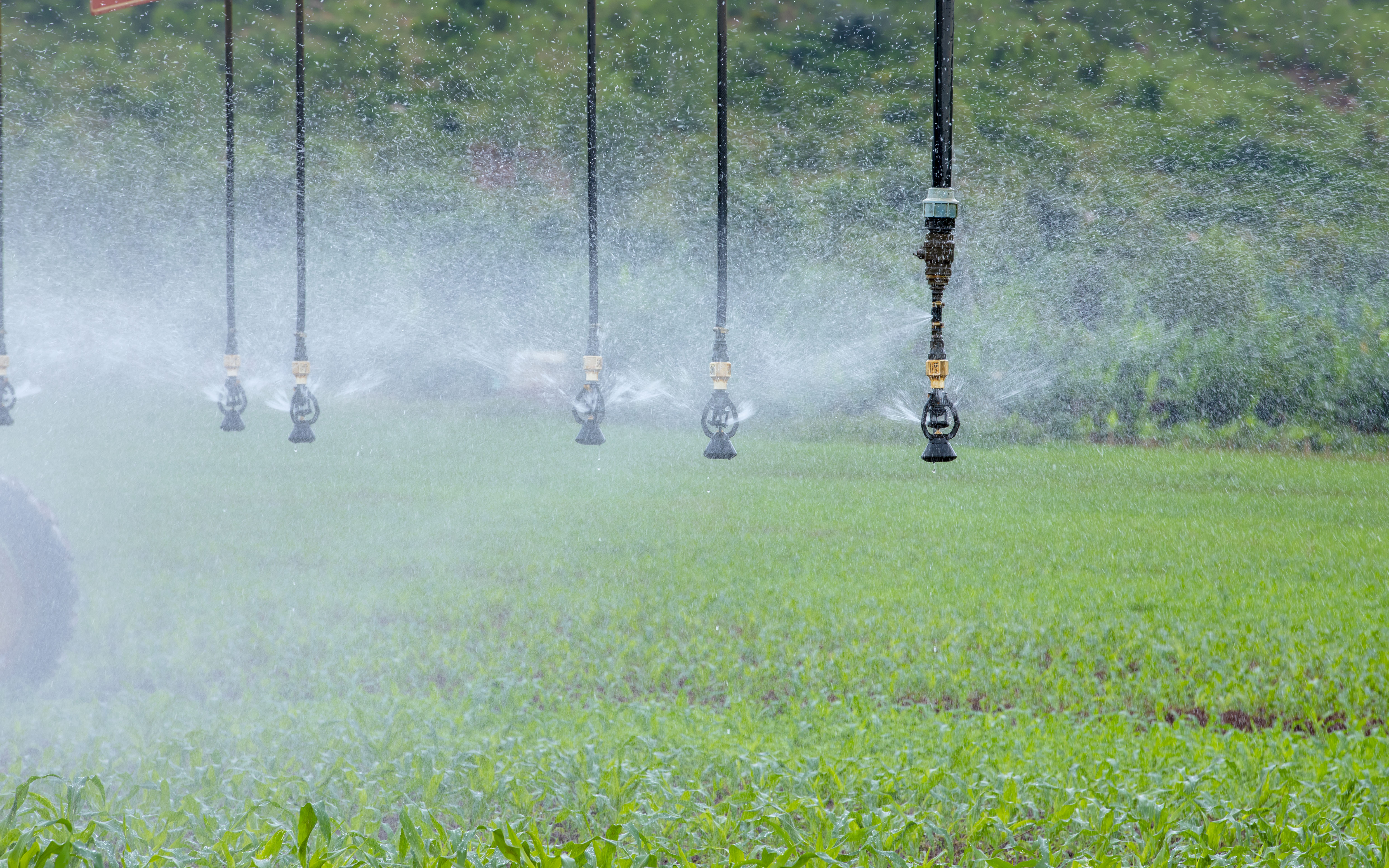
RWANDA’S AGRICULTURE SECTOR TRANSFORMATION OVER THE LAST 32 YEARS
Over the past 32 years, Rwanda’s agriculture sector has undergone a remarkable transformation, evolving from a subsistence farming into a modern,…
Read more
→
Rwanda launched Green House Crop Insurance to boost climate-resilient agriculture
On 7 May 2026, Green House Crop Insurance was officially launched during an event held at the headquarters of the National Institute of Statistics of…
Read more
→

Rwanda to hold third National Seed Congress bringing together actors in seed sector
Rwanda will hold its 3rd National Seed Congress in Kigali from 20th to 21st July 2026, an event that will bring together key stakeholders to discuss…
Read more
→

MINAGRI YIBUTSE KU NSHURO YA 32 ABARI ABAKOZI BAYO BAZIZE JENOSIDE YAKOREWE ABATUTSI
Kuri uyu wa Gatanu tariki ya 15 Gicurasi, 2026, Minisiteri y’Ubuhinzi n’Ubworozi (MINAGRI) n’abafatanyabikorwa bayo bibutse ku nshuro ya 32 abari…
Read more
→
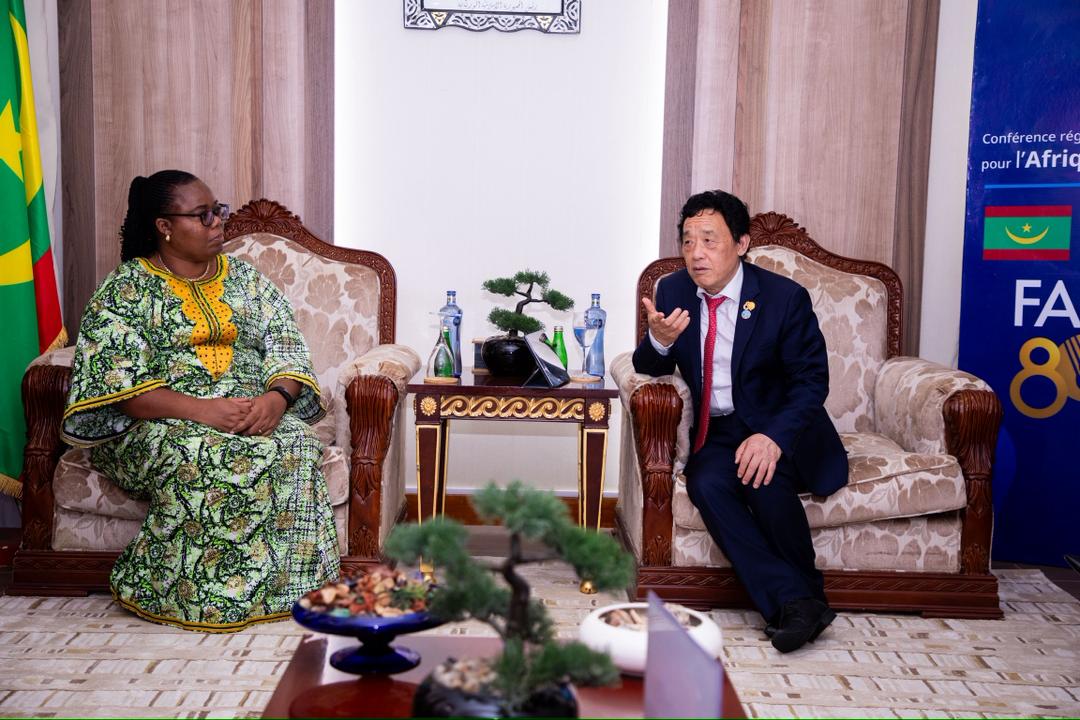
Minister of State Dr. Solange Uwituze meets FAO Director-General Dr. QU Dongyu
The Minister of State for Agriculture and Animal Resources (MINAGRI), Dr. Solange Uwituze, on Wednesday April 15th 2026 met with FAO Director-General,…
Read more
→