NIGERIAN DELEGATION ON AGRICULTURE DEVELOPMENT STUDY TOUR IN RWANDA
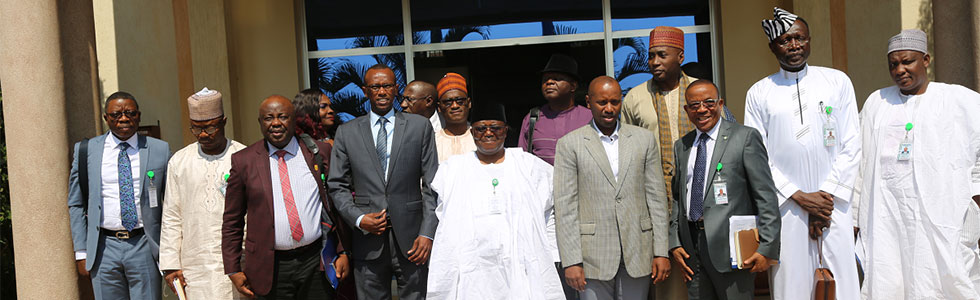
A delegation of senior officials from Nigeria’s National Institute for Policy and Strategic Studies is on study tour in Rwanda from July 31 to August 11, 2017 as part of their National Executive Course. The study tour is meant to learn about Science, technology and innovation for the development of Agriculture and Agro-allied industries.
The delegation, led by Prof. Habu S. Galadima, the Director of Research at the Institute, was on July 31, 2017 welcomed by Jean Claude Kayisinga, Permanent Secretary of the Ministry of Agriculture and Animal Resources (MINAGRI), and provided them with an overview on Rwanda’s agriculture sector.
While meeting with the ministry’s senior officials, the Nigerian delegation got explanations on how different home-grown solutions, initiated and implemented by the government of Rwanda, have been boosting the country’s agriculture sector over the last few years.
The delegation members were told how the Crop Intensification Programme (CIP), implemented since 2007 up to date, has improved access to inputs, land use consolidation, proximity extension services, land husbandry, irrigation, mechanisation, farmer organisations, post-harvest handling and storage and output market access.
Under CIP, for instance, fertilizer use increased from 4 kg to 32 kg /ha while households using improved seeds increased to 41% of farmers on land use consolidation, explained Dr Charles Murekezi, the Director General in charge of Agriculture Development in the Ministry.
The country’s food storage capacity has also increased more than twentyfold since 2008, the Director General said, adding that the agriculture production remains consistently higher than population growth. Agriculture remains the backbone of Rwanda’s economy: it contributes 33% to GDP and employs 70% of the population.
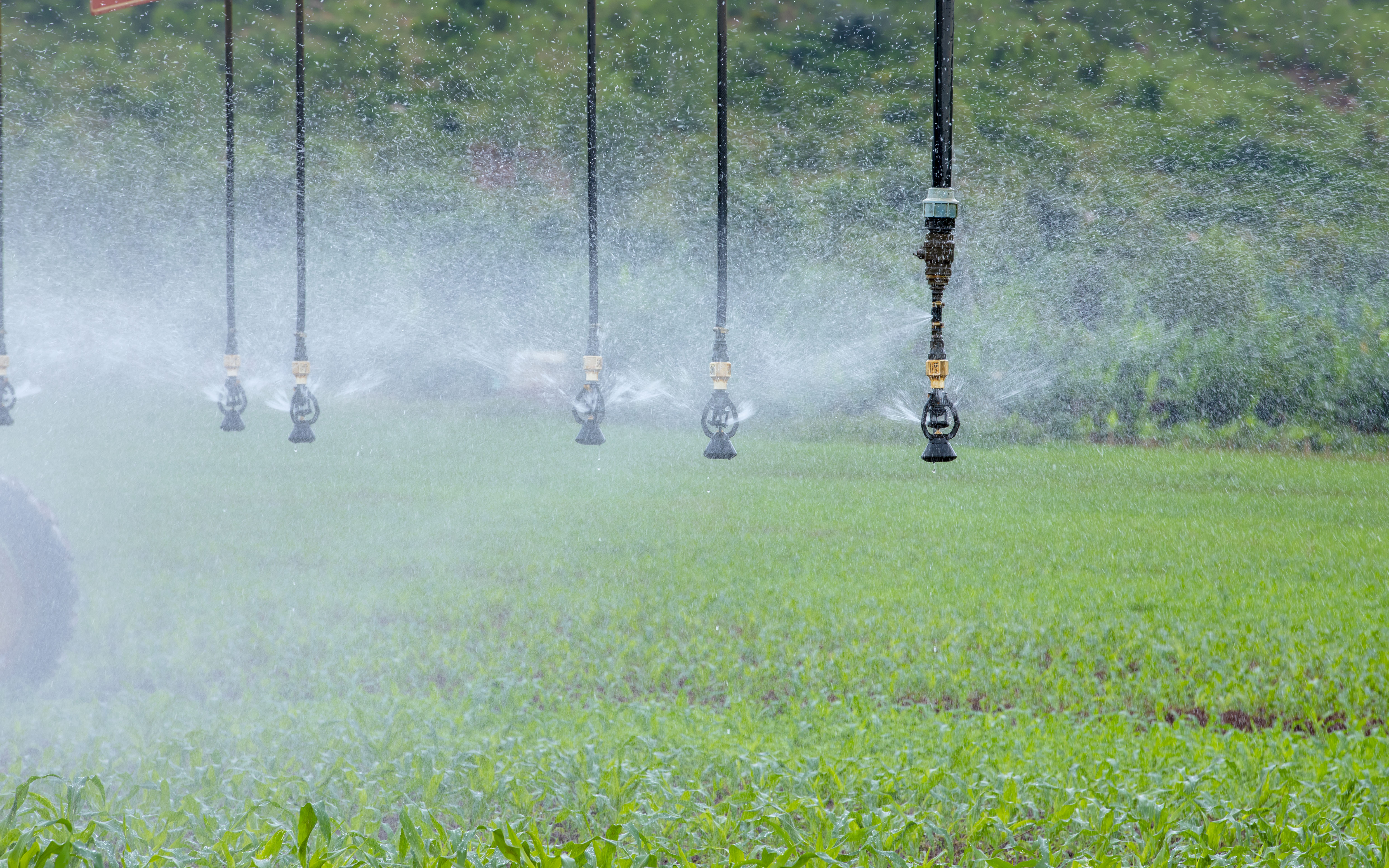
The government has also been investing hugely in irrigation in order to ensure improved yields. Currently, around 8% of potential irrigable land is irrigated. And there is a mechanism in place to enable more farmers to irrigate their crops.
Girinka (One Cow per Poor Family) programme is also another home-grown solution that attracted the interest of the delegation. Initiated in 2006, Girinka has so far seen the distribution of 294,319 cows to poor and vulnerable families. And beneficiaries get milk for home consumption and sale, access to manure for crop production, and future calves and bulls can be sold on for income.
The Nigerian delegation is also scheduled to meet with officials from Rwanda Agriculture Board (RAB), and interact with the agency’s scientists in a bid to learn from Rwanda’s best practices in the use of science, technology and innovation for the development of agriculture and agro-allied industries.
Topics

Rwanda held its third National Seed Congress bringing together actors in seed sector
Rwanda held its 3rd National Seed Congress in Kigali from 20th to 21st July 2026, an event that highly emphasized the role of research, biotechnology,…
Read more
→

Rwanda hosted Africa Food Systems Forum 2026
From 1st to 4th September 2026 in Kigali, Rwanda hosted the 20th edition of the Africa Food Systems Forum (AFSF), which brought together more than…
Read more
→

19th Rwanda Agricultural Show Concludes with Record Participation and Recognition of Agricultural Innovation
The 19th Rwanda Agricultural Show officially closed on Friday, 31 July 2026, at the Mulindi Show Ground in Gasabo District, Kigali City, marking…
Read more
→

Rwanda Agricultural Show 2026: Stakeholders urged to leverage innovation and strategic partnerships for agri-food systems transformation
The Minister of Agriculture and Animal Resources, Dr. Telesphore Ndabamenye, has called on farmers and other agricultural stakeholders to adopt…
Read more
→
RWANDA’S AGRICULTURE SECTOR TRANSFORMATION OVER THE LAST 32 YEARS
Over the past 32 years, Rwanda’s agriculture sector has undergone a remarkable transformation, evolving from a subsistence farming into a modern,…
Read more
→
Rwanda launched Green House Crop Insurance to boost climate-resilient agriculture
On 7 May 2026, Green House Crop Insurance was officially launched during an event held at the headquarters of the National Institute of Statistics of…
Read more
→

Rwanda to hold third National Seed Congress bringing together actors in seed sector
Rwanda will hold its 3rd National Seed Congress in Kigali from 20th to 21st July 2026, an event that will bring together key stakeholders to discuss…
Read more
→

MINAGRI YIBUTSE KU NSHURO YA 32 ABARI ABAKOZI BAYO BAZIZE JENOSIDE YAKOREWE ABATUTSI
Kuri uyu wa Gatanu tariki ya 15 Gicurasi, 2026, Minisiteri y’Ubuhinzi n’Ubworozi (MINAGRI) n’abafatanyabikorwa bayo bibutse ku nshuro ya 32 abari…
Read more
→
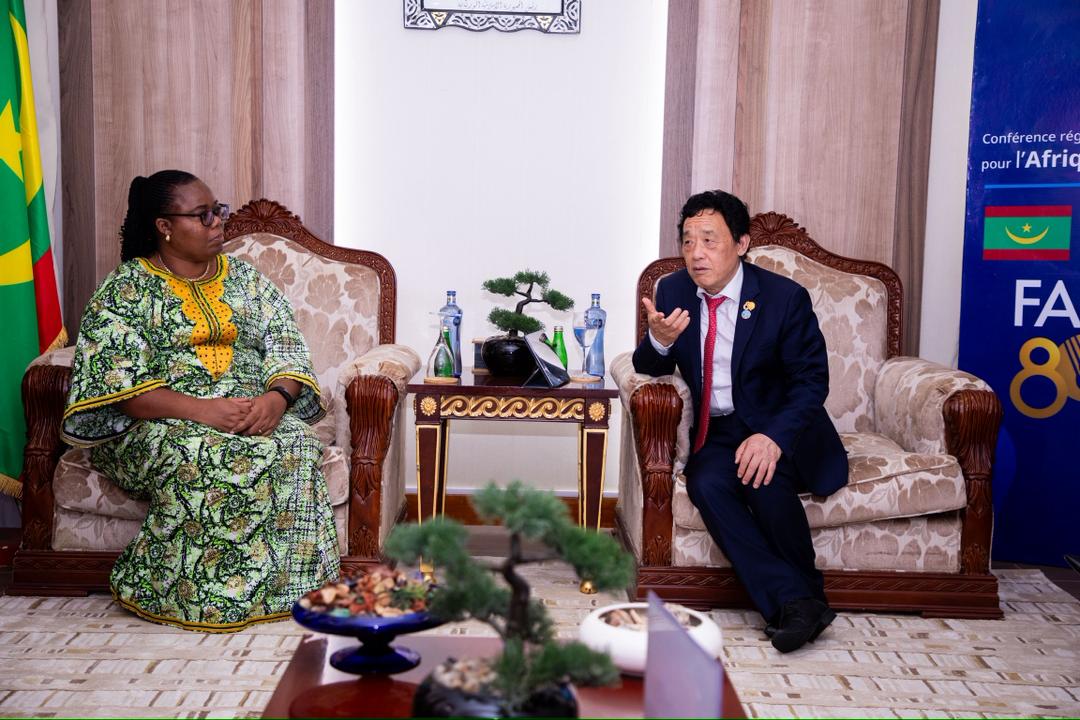
Minister of State Dr. Solange Uwituze meets FAO Director-General Dr. QU Dongyu
The Minister of State for Agriculture and Animal Resources (MINAGRI), Dr. Solange Uwituze, on Wednesday April 15th 2026 met with FAO Director-General,…
Read more
→