Rwanda committed to maintaining healthy soils as the World observes Soil Day

The Ministry of Agriculture and Animal Resources (MINAGRI) has been investing hugely in a number of initiatives meant to maintain healthy soils and the ministry remains committed to increasing year by year the proportion of arable area under effective erosion control systems in a bid to unlock Rwanda’s agricultural potential.
Coverage rate of both progressive and radical terraces from different slope classes are 81.44% and 36.75% respectively (2015/2016). For the fiscal year 2015/2016, the achievements were 894.7 ha and 21492 ha for both radical and progressive terraces respectively.
And the country targets for the FY 2017/2018 in Land Husbandry and Soil Conservation are 10,000 ha for radical terraces and 20,000 ha for progressive terraces. In addition, the ministry also keeps promoting the use of fertilizers in a bid to improve the soil fertility.
The ministry reiterates its commitment to maintaining healthy soils as the rest of the world marks the World Soil Day. Observed on the 5th December every year, this year’s theme is: “Soils and Pulses, a Symbiosis for Life.”
Pulses ranging from beans, soybeans to peas among others are the most important crops in Rwanda for both food security and nutrition. They are currently grown on 323 316 ha during this season 2017A. The country is believed to be the world’s largest consumer of the common beans and most of the beans that are grown in the region have been bred in Rwanda.
The positive contributions of pulses to soil properties are many: they fix the atmosphere nitrogen and improve its biodiversity, fertility and structure.
That is why the Food and Agriculture Organization (FAO) dedicates this year's World Soil Day to pulses. Also, owing to their nutritional benefits, 2016 was declared the International Year of Pulses.
Enhancing agricultural productivity through Integrated Soil Fertility Management (ISFM) approach is one Rwanda’s strategies for soil management through the proper use of fertilizers, improved seeds and scaling up agro forestry and evergreen agriculture practices for climate change adaptation in drought prone areas.
Soil is an essential resource and a vital part of the natural environment from which most of the global food is produced.
Topics

Rwanda held its third National Seed Congress bringing together actors in seed sector
Rwanda held its 3rd National Seed Congress in Kigali from 20th to 21st July 2026, an event that highly emphasized the role of research, biotechnology,…
Read more
→

Rwanda hosted Africa Food Systems Forum 2026
From 1st to 4th September 2026 in Kigali, Rwanda hosted the 20th edition of the Africa Food Systems Forum (AFSF), which brought together more than…
Read more
→

19th Rwanda Agricultural Show Concludes with Record Participation and Recognition of Agricultural Innovation
The 19th Rwanda Agricultural Show officially closed on Friday, 31 July 2026, at the Mulindi Show Ground in Gasabo District, Kigali City, marking…
Read more
→

Rwanda Agricultural Show 2026: Stakeholders urged to leverage innovation and strategic partnerships for agri-food systems transformation
The Minister of Agriculture and Animal Resources, Dr. Telesphore Ndabamenye, has called on farmers and other agricultural stakeholders to adopt…
Read more
→
RWANDA’S AGRICULTURE SECTOR TRANSFORMATION OVER THE LAST 32 YEARS
Over the past 32 years, Rwanda’s agriculture sector has undergone a remarkable transformation, evolving from a subsistence farming into a modern,…
Read more
→
Rwanda launched Green House Crop Insurance to boost climate-resilient agriculture
On 7 May 2026, Green House Crop Insurance was officially launched during an event held at the headquarters of the National Institute of Statistics of…
Read more
→

Rwanda to hold third National Seed Congress bringing together actors in seed sector
Rwanda will hold its 3rd National Seed Congress in Kigali from 20th to 21st July 2026, an event that will bring together key stakeholders to discuss…
Read more
→

MINAGRI YIBUTSE KU NSHURO YA 32 ABARI ABAKOZI BAYO BAZIZE JENOSIDE YAKOREWE ABATUTSI
Kuri uyu wa Gatanu tariki ya 15 Gicurasi, 2026, Minisiteri y’Ubuhinzi n’Ubworozi (MINAGRI) n’abafatanyabikorwa bayo bibutse ku nshuro ya 32 abari…
Read more
→
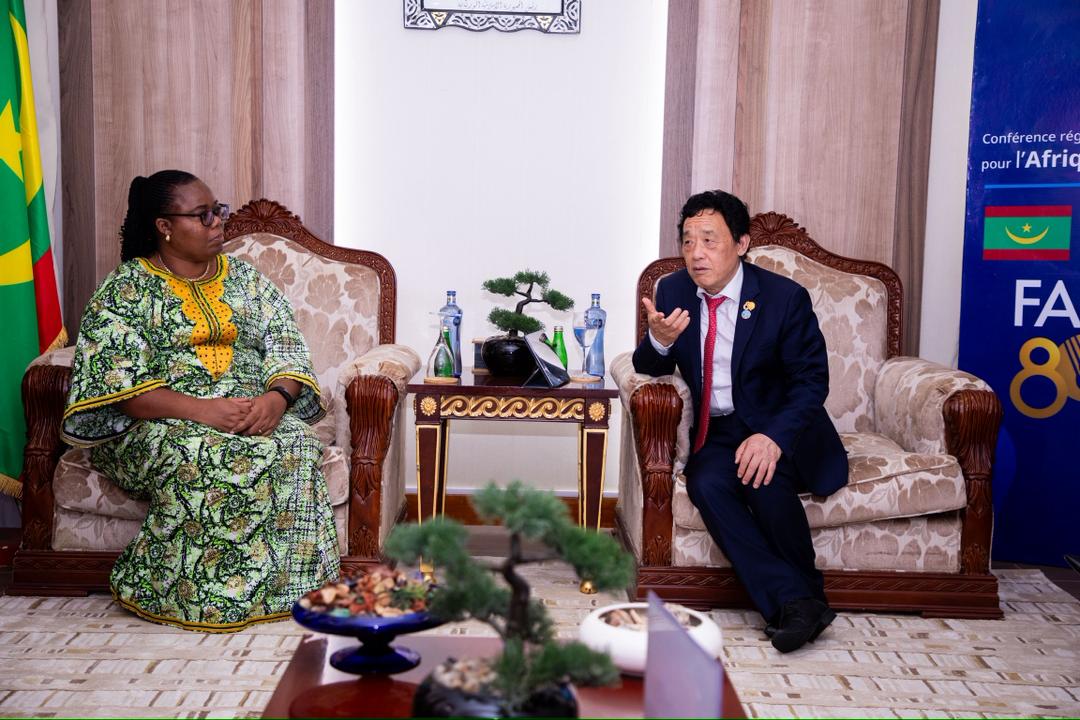
Minister of State Dr. Solange Uwituze meets FAO Director-General Dr. QU Dongyu
The Minister of State for Agriculture and Animal Resources (MINAGRI), Dr. Solange Uwituze, on Wednesday April 15th 2026 met with FAO Director-General,…
Read more
→