Rwanda hosts second edition of the African Conference on Agricultural Technologies
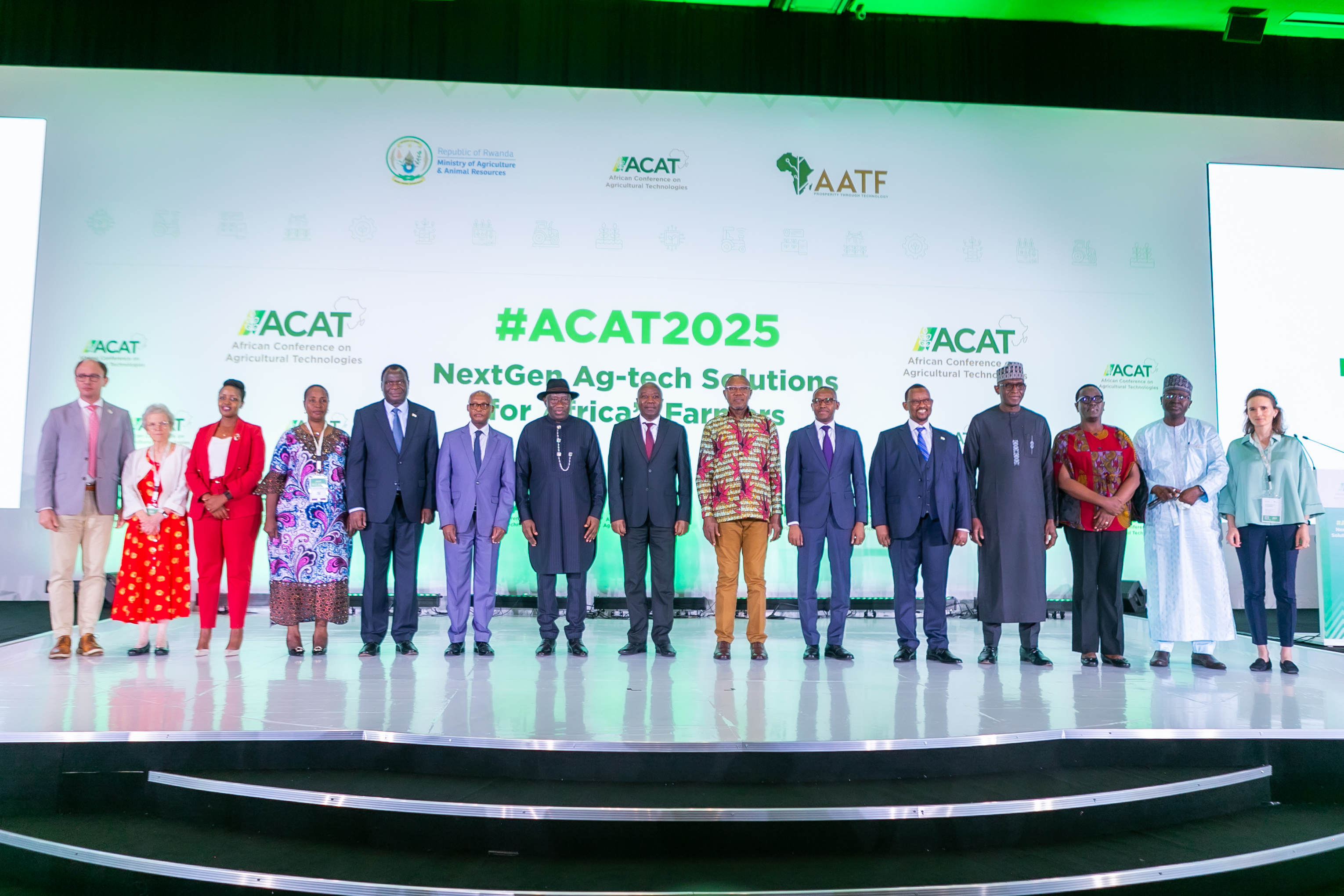
The Government of Rwanda through the Ministry of Agriculture and Animal Resources (MINAGRI) in collaboration with African Agricultural Technology Foundation (AATF), are hosting the second edition of the African Conference on Agricultural Technologies (ACAT2025) from 9–12 June 2025 in Kigali.
This four-day event, held under the theme of “NextGen Ag-tech Solutions for Africa’s Farmers,” aims to explore and deliberate on next-generation agricultural technologies that can transform African agriculture and empower farmers.
During the high-level official opening ceremony of the ACAT2025, Rwanda’s Prime Minister, Dr. Edouard Ngirente, called upon African nations to integrate technology into agriculture by empowering young innovators, mitigating risks through insurance and climate-resilient seeds, and expanding digital farming tools to enhance food security and promote sustainable growth.
He urged all the stakeholders attending the conference to use the ACAT platform to not only share knowledge but also forge practical partnerships that can scale proven innovations and bring real transformation to smallholder farmers who are the true custodians of Africa’s food systems.
“Let us remember that technology is not just about tools and platforms; it is about people. It is about a farmer, young or old, in a rural village using a mobile phone to check crop prices. It is about a young innovator developing a drone to monitor pests and diseases. It is about a continent that believes in its capacity to feed itself and to thrive,” Dr. Ngirente added.
In his remarks, H.E. Dr. Goodluck Ebele Jonathan, Former President of the Federal Republic of Nigeria, emphasized that Africa can overcome many of the current challenges facing its agricultural sector. However, he maintained that no single country, institution, or actor can transform African agriculture alone.
“Transforming Africa’s agriculture can only happen if countries and institutions in the region collaborate across borders and sectors. African governments must work hand-in-hand with private sector players, research institutions, civil society, and most importantly, with the farmers themselves to foster and sustain a new era of farming and food production. It is a high paced era that leaves no room for excuses. Africa must make progress and move forward,” he said.
In his remarks, Dr. Mark Cyubahiro Bagabe, Minister at MINAGRI, emphasized that putting farmers' needs and preferences first is a paradigm shift. It means placing smallholder farmers, the unsung heroes of our food systems, at the center of all decisions, investments, and innovations. It involves listening to their challenges, valuing their traditional knowledge and wisdom, and co-creating solutions that empower them to enhance productivity.
“Our policies and programs in Rwanda are based on the knowledge that providing farmers with the necessary resources, information, and support networks is essential for sustainable development,” he said.
Minister Bagabe, pointed out that Rwanda’s agricultural transformation agenda has been informed by a farmer-centric approach, which ensures that useful innovations are accessible to farmers.
Dr. Canisius Kanangire, the Executive Director of AATF, noted that when farmer centered technologies are implemented within a supportive and enabling environment, they significantly increase productivity, improve livelihoods, and drive economic empowerment.
“For over two decades, AATF has coordinated the formation and implementation of public-private partnerships aimed at facilitating development and access to agricultural technologies that address production challenges, enhance yields, and contribute to the continent’s economic growth while enhancing community health and wealth.
ACAT will continue to provide a critical platform for stakeholders who are committed to advancing Africa’s socio-economic development and food security through agricultural innovation. It stimulates conversations on sustainable pathways for developing, transferring, and adopting agricultural technologies among smallholder farmers to achieve rural economic transformation.
The Conference has brought together over 800 delegates drawn from the African continent and beyond. They include government representatives, industry thought leaders, policymakers, technical experts, private institutions, farmers, women, and youth. The convening is expected to build momentum towards action on current discussions and recommendations on the importance of the utilization of innovative agricultural technologies.
END
Topics

Rwanda held its third National Seed Congress bringing together actors in seed sector

Rwanda hosted Africa Food Systems Forum 2026

19th Rwanda Agricultural Show Concludes with Record Participation and Recognition of Agricultural Innovation

Rwanda Agricultural Show 2026: Stakeholders urged to leverage innovation and strategic partnerships for agri-food systems transformation

RWANDA’S AGRICULTURE SECTOR TRANSFORMATION OVER THE LAST 32 YEARS
Rwanda launched Green House Crop Insurance to boost climate-resilient agriculture

Rwanda to hold third National Seed Congress bringing together actors in seed sector

MINAGRI YIBUTSE KU NSHURO YA 32 ABARI ABAKOZI BAYO BAZIZE JENOSIDE YAKOREWE ABATUTSI