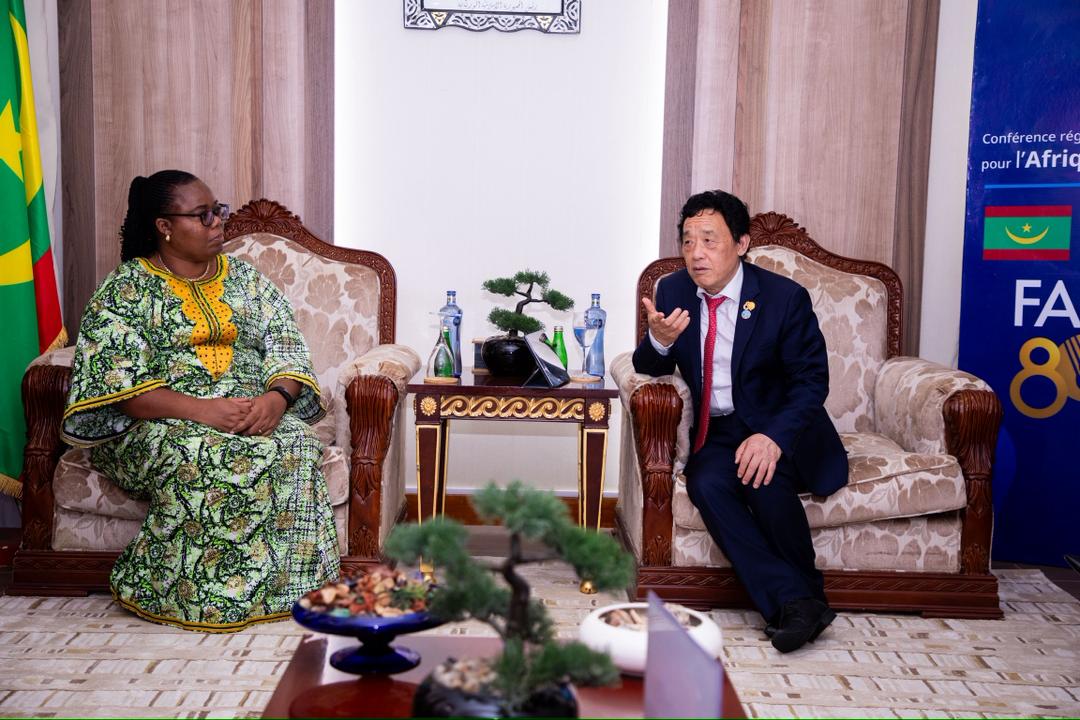
Rwanda held its third National Seed Congress bringing together actors in seed sector

Rwanda held its 3rd National Seed Congress in Kigali from 20th to 21st July 2026, an event that highly emphasized the role of research, biotechnology, and strong partnerships in transforming the country’s seed sector.
The congress was held under the theme: “Seeds as a Strategic Engine for National Transformation: Advancing a Competitive, and Private-Sector–Led Seed System for Food Security, Jobs and Trade”.
Speaking at the official opening of the event, the Chairperson of the National Seed Association of Rwanda (NSAR), Innocent Namuhoranye, described investing in quality seed in Rwanda as investing in the country’s future.
“When farmers access better seed, yields increase. When yields increase, household incomes improve. When incomes improve, rural economies grow. When agriculture grows, agro-industries expand. When agro-industries expand, employment is created, exports increase and national prosperity follows. This is why investment in the seed sector should be viewed not merely as an agricultural intervention, but as a strategic investment in Rwanda’s economic future,” he said.
Drawing on lessons learned from the 1st and 2nd National Seed Congresses and the collaborative milestones realized as a result of the gatherings, the 3rd Rwanda National Seed Congress (RNSC 2026) once again served as a high-level platform to accelerate implementation of the country’s vision to be a regional seed hub.
The Representative of Food and Agriculture Organization (FAO) in Rwanda, Mr. Mohamed Aw Dahir, described the meeting as a platform that reflects Rwanda's strong commitment to building a modern, competitive, and resilient agri-food system towards a sustainable economic growth.
“Allow me to commend the Government of Rwanda together with the National Seed Association of Rwanda and all partners, for convening this important Congress. It demonstrates the collective commitment to strengthening Rwanda's seed system through innovation, partnership, and investment,” he told delegates at the congress.
Rwanda’s Minister of State for Agriculture and Animal Resources (MINAGRI), Dr. Solange Uwituze, opened the congress, encouraging each participant to engage actively, exchange ideas openly, and leave the congress with concrete commitments that will advance Rwanda's seed sector to the next level.
“Together, let us build a seed industry that is innovative, resilient, internationally competitive, and capable of driving agricultural transformation, economic prosperity, and sustainable development for generations to come,” she said.
The minister highlighted the importance of research, biotechnology, and strong partnerships among government, seed companies, researchers, development partners, and farmers in transforming the seed sector into a key engine of agricultural and economic development.
Enock Chikava, Director of Economic Opportunity at the Gates Foundation, agrees that seed is the most important, but often overlooked, agricultural input.
“Fertilizer helps. Irrigation helps. Machines help. But none of them can create genetic potential that was never there to begin with. Genetics is the code — everything else rides on it,” he said at the meeting.
He added: “If semiconductors are the foundational technology of the digital economy, seed is the foundational technology of bioeconomy, and Africa is sitting on some of the richest bio-diversity resources on Earth”.
The Secretary General of the International Seed Testing Association (ISTA), Dr. Andreas Wais, congratulated Rwanda for the country’s commitment to work towards attaining globally recognized standards for seed production and trade and once again pledged his organization’s support.
“As mentioned ISTA is working with NSAR to bring these benefits to Rwanda, not only to help the national seed industry, but all stakeholders, public and private,” he said.
Organised by NSAR in collaboration with the Government of Rwanda and the Private Sector Federation (PSF), with support from different development partners, the 3rd National Seed Congress provided an opportunity to share the status report on relevant industry strategic goals and implementation progress of Rwanda’s seven-year strategic roadmap for seed industry development by 2030.
More than 300 participants from Africa, Europe, America, Asia, and Australia attended the meeting, including seed industry players from both public and private sectors, academia, scientists, development partners, financiers, and farmers.
Different participants at the event also exhibited their excitement and commitment to keep investing in transforming the country’s seed sector, describing it as a key driver for the country’s economy.
Speaking on a panel discussion at the congress, Bank of Kigali’s Chief Business and Corporate Banking Officer, Levi Gasangwa, highlighted the bank’s growing commitment to agriculture.
“Our agribusiness exposure has grown from less than USD 20 million to nearly USD 95 million in three years. This reflects a deliberate increase in our risk appetite, strategic alignment with Rwanda’s second National Strategy for Transformation (NST2), and a dedicated, intentional focus on agriculture,” he said.
He emphasized that for further unlocking of the seed industry’s potential, there is need to provide integrated financing solutions covering working capital, equipment and supply-chain finance, while partnering with development institutions to extend longer-tenor funding.
As for Group Director General of the African Risk Capacity (ARC) Group, Dr. Ngabitsinze Jean Chrysostome, he congratulated NSAR and the Government of Rwanda, and all involved partners for successfully convening the congress.
“Quality seed is the foundation of every successful harvest. It is where food security begins, where resilience to climate change is strengthened, and where economic transformation takes root. Investing in strong seed systems is an investment in farmers, in national prosperity, and in the well-being of future generations,” he said.
Regis Rugemanshuro, Chief Executive Officer of the Rwanda Social Security Board (RSSB), said that strategic investments indeed need to be made in order to transform farmers’ lives, and he highlighted job creation and retirement pension for the farmers as key parts of RSSB’s core business.
“Agriculture ensures sustainable returns and RSSB is ensuring return of the saving funds to its members through financing agriculture. RSSB took a challenge to support seed sector,” he told delegates at the meeting.
François Twagirumukiza, Chairperson of Rwanda’s Private Sector Federation (PSF), said that after the third national seed congress, the focus should shift from dialogue to implementation.
“The theme of this year's Congress could not be more timely. Seeds are no longer viewed merely as agricultural inputs. They are strategic economic assets capable of driving productivity, creating jobs, strengthening food security, expanding regional trade, attracting investment and accelerating Rwanda's economic transformation,” he noted.
Held every year, Rwanda’s National Seed Congress has provided a regular platform to look at the progress on implementation of the country’s 7-year strategic roadmap for seed industry development in various areas such as industry compliance and self-regulation, enhancement of the regulatory environment, as well as enhancing mutual accountability and identifying synergies, linkages and complementarities on the achievement of the main goals of the roadmap running up to the year 2030.
END.
Topics

Rwanda held its third National Seed Congress bringing together actors in seed sector

Rwanda hosted Africa Food Systems Forum 2026

19th Rwanda Agricultural Show Concludes with Record Participation and Recognition of Agricultural Innovation

Rwanda Agricultural Show 2026: Stakeholders urged to leverage innovation and strategic partnerships for agri-food systems transformation
RWANDA’S AGRICULTURE SECTOR TRANSFORMATION OVER THE LAST 32 YEARS
Rwanda launched Green House Crop Insurance to boost climate-resilient agriculture

Rwanda to hold third National Seed Congress bringing together actors in seed sector

MINAGRI YIBUTSE KU NSHURO YA 32 ABARI ABAKOZI BAYO BAZIZE JENOSIDE YAKOREWE ABATUTSI